
Dealing with rainwater runoff and pet hygiene issues
Introduction
In tropical climates like the Dominican Republic, heavy rainfall is a frequent occurrence that can significantly disrupt pet hygiene and home cleanliness. Rainwater runoff often carries debris, bacteria, and pollutants from streets and gardens directly into the areas where your pets play and rest. Understanding how to manage these environmental shifts is essential for preventing skin infections, parasites, and the buildup of indoor grime, especially during the rainy season when moisture levels stay high for weeks at a time.
Effective management of rainwater issues ensures that your pet remains healthy and your living space stays sanitary despite the unpredictable weather. By implementing proactive cleaning routines and understanding the risks associated with wet environments, pet owners can mitigate the discomfort and health hazards brought by the rainy season. This guide provides practical strategies to navigate the challenges of moisture, runoff, and hygiene.
Risks of contaminated rainwater and runoff

Rainwater runoff is not just water; it is a mixture of whatever the liquid touches on its way to your pet. In urban and suburban environments, this runoff can collect oil from roads, fertilizers from lawns, animal waste, and various microbes. When pets walk through these puddles or damp patches, they inadvertently bring these contaminants into your home on their paws and fur, which is why contaminated puddles pose a real risk to pets that drink from or splash through them.
One of the primary risks is the development of dermatological issues. Constant exposure to damp fur and contaminated water can lead to hotspots, fungal infections, and bacterial dermatitis, and the trapped moisture on the skin is a common trigger for dog skin hotspots in humid weather. Furthermore, runoff can harbor larvae or microorganisms that increase the risk of parasitic infections, including intestinal parasites that pets may ingest while grooming wet fur. Beyond the pet's physical health, the transfer of these pollutants to furniture, carpets, and flooring creates a secondary hygiene challenge for the entire household.
Strategies for managing muddy paws and wet fur
Maintaining pet hygiene during the rainy season requires a systematic approach to how pets enter and exit the home. Instead of waiting for the mess to accumulate, establishing a "decontamination zone" near the entrance can save significant time and effort and keep muddy paws from spreading grime through every room.
A simple transition protocol can include the following steps:
- The Paw Station: Keep a dedicated container of water or pet-safe wipes by the door to clean pet paws after walk time, wiping between the toes where mud and debris collect most easily.
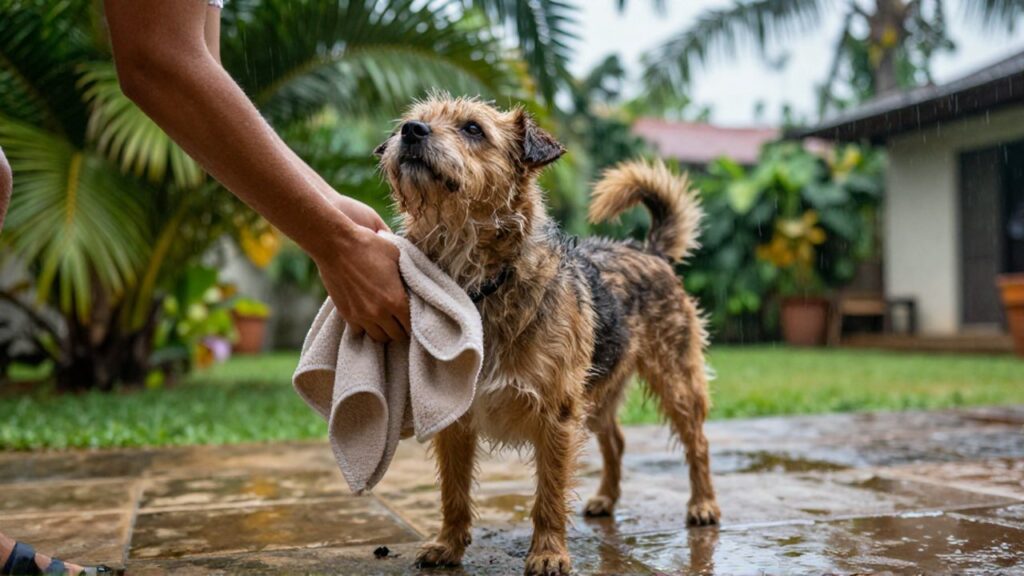
- The Drying Routine: Use a dedicated microfiber towel to dry the underbelly, paws, and legs of the pet to prevent moisture from being tracked onto rugs, and follow a consistent wet dog drying routine that reaches the skin rather than just the outer coat.
- Fur Maintenance: For long-haired breeds, a quick brush after a walk helps remove trapped debris and prevents matting caused by dampness.
It is often more effective to clean the pet in small increments throughout the day rather than attempting a full bath after a heavy storm, which can be stressful and may leave the pet's skin overly dry if not managed carefully. Overbathing dog skin strips the natural oils that protect against infection, so reserve full baths for genuinely dirty coats and rely on spot cleaning the rest of the time.
Preventing indoor hygiene degradation

When rainwater carries outdoor elements inside, the focus must shift to surface sanitation. Porous surfaces like rugs and upholstery are particularly vulnerable to absorbing moisture and the bacteria carried within it, and damp textiles left untreated can develop pet bedding mildew during the rainy season.
To maintain a hygienic indoor environment, consider these practices:
- Frequent Floor Cleaning: Use a pet safe disinfectant on hard floors to neutralize any microorganisms brought in by runoff, and mop entryways daily during heavy rain to prevent indoor grime from building up.
- Managing Entry Points: Utilizing heavy-duty doormats can help absorb excess moisture before it reaches the main living areas.
- Laundering Textiles: Regularly wash pet bedding and any towels used for drying, as these can quickly become breeding grounds for mildew if they remain damp.
| Feature | Action Required | Frequency |
|---|---|---|
| Paws/Feet | Wipe or wash with pet-safe wipes | Every entry |
| Hard Floors | Mop with pet-safe disinfectant | Daily during heavy rain |
| Bedding | Wash in warm water | Weekly or as needed |
| Carpets | Vacuum and spot treat | As debris appears |
Common mistakes in rainy season pet care
A frequent error made by pet owners is over-bathing with harsh human shampoos. A pet's skin pH is different from a human's, and using improper products can strip natural oils, making the skin more susceptible to the very infections owners are trying to prevent. Always use products formulated specifically for animals, and check with your veterinarian in the Dominican Republic for a shampoo suited to your pet's coat and skin type.
Another mistake is ignoring the moisture trapped in the ears. When pets go out in the rain, water can become lodged in the ear canal, creating a warm, dark environment perfect for yeast and bacterial growth, so ear moisture from dog rain exposure should be addressed after every outing. Gently drying the outer ear with a cotton ball after a walk is a vital but often overlooked step. Finally, many owners neglect the cleanliness of their pet's water bowls during the rainy season; ensure that outdoor water sources are cleaned regularly to prevent algae and bacteria from accumulating in the humid air.
Frequently asked questions
How can I tell if my pet has a skin infection from rainwater? Look for signs such as redness, excessive licking or chewing of specific areas, a strong odor, or hair loss. If the skin looks inflamed or feels warm, consult a veterinarian.
Is it safe to let my pet walk through puddles? While a quick splash is usually fine, prolonged contact with stagnant runoff can expose them to chemicals and parasites, including larvae carried by rainwater. It is best to steer them toward dry paths whenever possible and to clean their paws thoroughly once back inside.
What is the best way to dry a pet after a heavy rain? Use a soft, absorbent towel to pat the fur dry rather than rubbing vigorously, which can irritate the skin. Focus on areas where water gets trapped, such as between the toes and under the belly.
How do I prevent my house from smelling musty during the rainy season? Ensure that pet bedding is dried completely before use and maintain good airflow in the home. Regularly cleaning paw tracks and floor surfaces will also help manage odors.
Leave a Reply