
How to secure pet balconies in coastal high-rises
Introduction
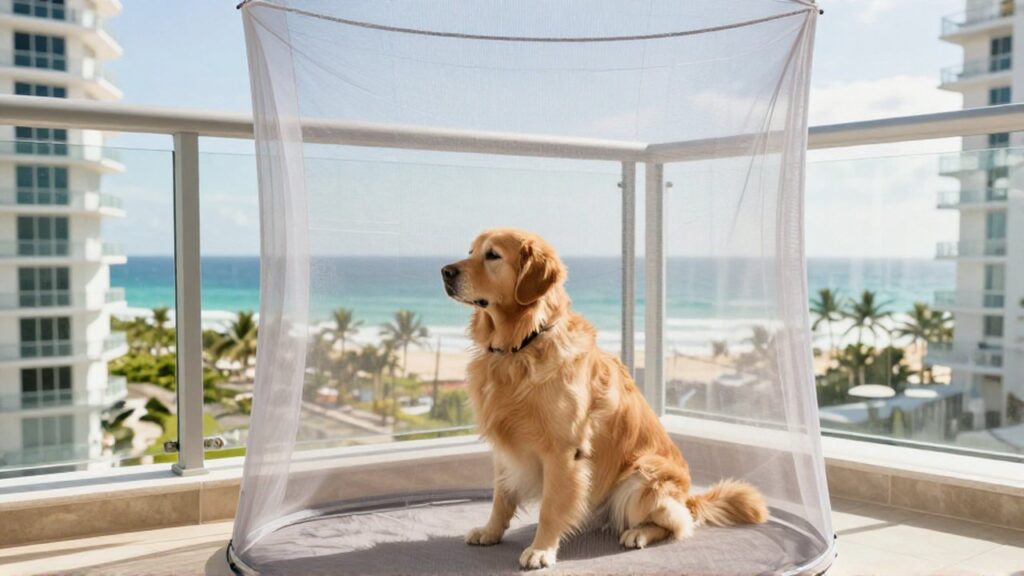
Living in a high-rise apartment in a coastal region offers breathtaking views and refreshing breezes, but for pet owners, it presents a unique set of safety challenges. Balconies, while providing essential outdoor access and ventilation, can become significant hazards if not properly secured. The combination of height, wind gusts, and the presence of curious or agile animals necessitates a proactive approach to high-rise pet safety.
Securing a balcony is not merely about preventing a fall; it is about creating a controlled environment where your pet can enjoy the outdoors without accidental escapes or exposure to dangerous elements. This is especially critical in tropical coastal areas where sudden weather changes or strong sea breezes can unexpectedly unsettle a pet, potentially leading them to scramble toward a railing. A well-planned pet proof balcony railing system addresses both the physical gaps and the behavioral triggers that lead animals to test their boundaries.
Proper containment involves selecting the right materials that can withstand salty air and high winds while ensuring the physical structure is strong enough to hold a pet's weight. By implementing these safety measures, you can mitigate risks such as falls, limb entrapment, or accidental escapes, ensuring your pet's outdoor time remains a positive experience.
Risks of unoptimized balcony spaces
An unsecured balcony in a high-rise building poses several layers of danger. The most obvious risk is the fall, which can occur in a split second if a pet sees a bird, a lizard, or another animal outside the railing. Even smaller pets, like cats or small dog breeds, can find gaps in standard railings that are wider than they appear, making balcony gap hazards pets a leading cause of balcony-related injuries.
Another significant risk is limb entrapment. Many modern balcony railings feature vertical slats that are spaced widely enough for a pet's head or paw to slip through, potentially leading to injury or panic. Furthermore, in coastal environments, the high-rise setting introduces the factor of wind. Strong gusts can cause a pet to lose its footing or become startled, driving it toward the edge of the balcony, which is why wind resistant pet netting is a key consideration for any coastal installation.
Finally, pet owners must consider the "escape" factor. Animals are intuitive and can learn to squeeze through small openings or climb over low barriers if they are motivated by something they see outside. Without a secondary layer of containment, the balcony remains an unpredictable space where a pet escape balcony scenario can unfold in seconds.
Effective containment solutions for pets
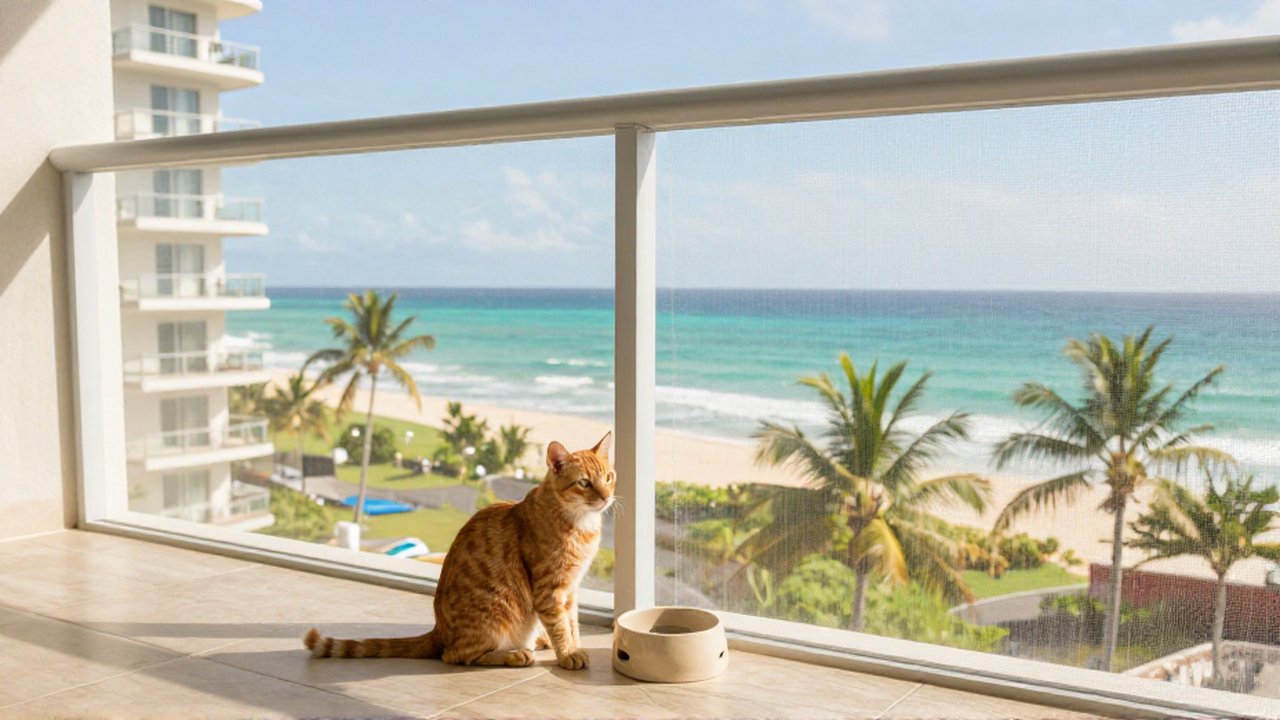
To turn a high-rise balcony into a safe zone, you typically need to add a secondary barrier to the existing architectural railing. There are several methods to achieve this, depending on your pet's size, agility, and the building's regulations. The most common approach is balcony containment for pets using a combination of netting, panels, or mesh tailored to the specific layout of your terrace.
Pet safety netting This is one of the most popular solutions for apartment dwellers. High-quality, heavy-duty nylon or polyethylene netting can be tension-mounted across the entire balcony opening. It is almost invisible from a distance, preserving your view, but creates a solid wall that prevents animals from passing through. When choosing netting, ensure it is UV-resistant, as the intense tropical sun in coastal areas can degrade standard plastics quickly. For coastal balconies, opt for balcony netting tropical climate grades that are specifically rated to withstand both UV exposure and salt-laden humidity.
Transparent acrylic or plexiglass shields For an aesthetic-focused approach, installing clear acrylic panels can be highly effective. These panels provide a solid physical barrier that is much harder for a pet to climb or squeeze through. They are particularly useful for preventing small animals from slipping through thin railings. However, they must be installed securely to withstand wind pressure and salt corrosion. Acrylic balcony panels pets are a favored choice among owners who want to preserve an unobstructed ocean view while maintaining a robust safety barrier.
Metal mesh or wire fencing For more robust protection, especially for larger or more powerful dogs, metal mesh is an excellent option. It offers maximum durability and is much harder to damage. While it is more visible than netting, it provides a sense of permanent security. Ensure that the mesh is fine enough to prevent any part of the pet's body from getting stuck. Metal mesh balcony fencing is also the most reliable choice in high-wind zones, where lighter materials may flex or tear under repeated gusts.
Comparison of containment materials
| Material | Visibility | Durability | Ease of Installation | Best For |
|---|---|---|---|---|
| Safety Netting | Very Low | Moderate | High | Cats and small dogs |
| Acrylic Panels | Low | High | Moderate | Aesthetic views/Small pets |
| Metal Mesh | High | Very High | Low | Larger pets/High wind areas |
Practical steps for securing your balcony
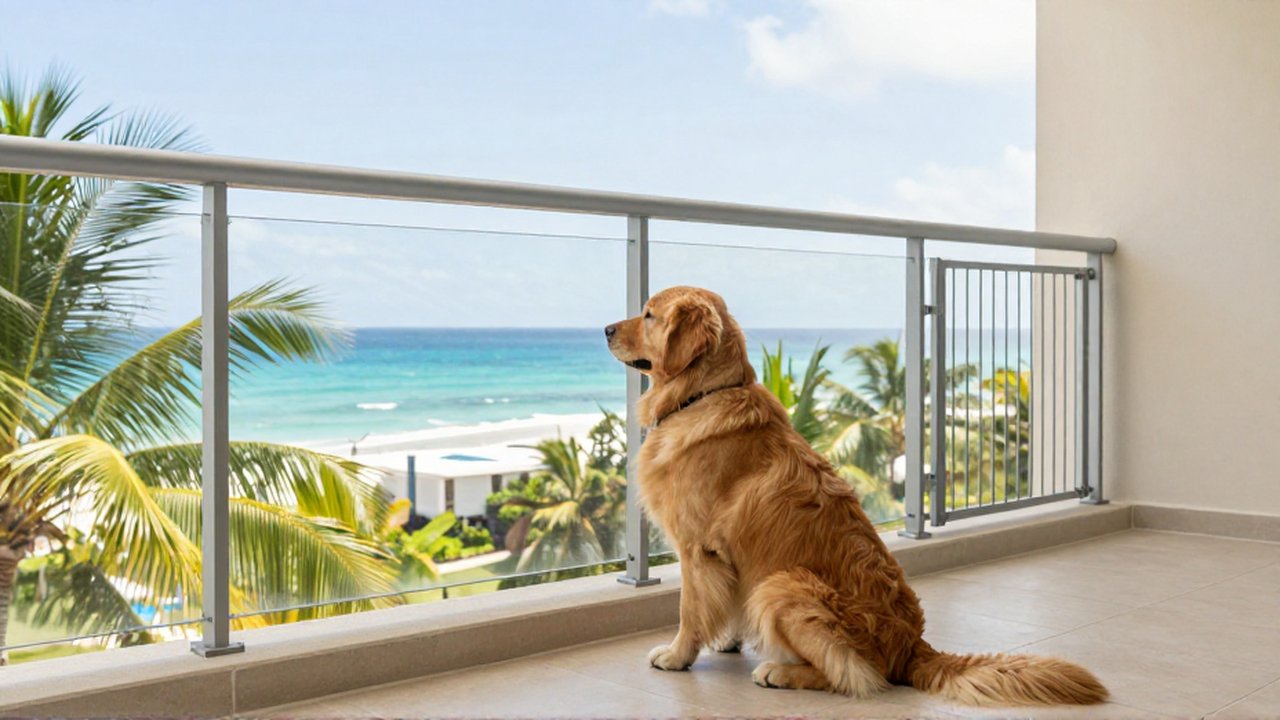
Before purchasing any materials, start by inspecting your current balcony structure. Identify any gaps between the floor and the railing, as well as the spacing between individual slats. This initial assessment will tell you exactly which areas need balcony safety netting or additional mesh to close off potential escape routes.
First, consult your building management or homeowners' association. Many high-rises have strict rules regarding modifications to the exterior appearance of the building, and apartment pet balcony rules can vary widely between properties. Knowing what is permitted—such as specific colors or types of mesh—will save you time and potential legal issues.
Second, measure the dimensions of the entire opening accurately. You want the containment to extend from the floor to the top of the railing, and from one side wall to the other, leaving no gaps at the corners.
Third, choose a mounting method that does not damage the building property. Using tension rods, heavy-duty zip ties, or specialized mounting brackets can secure nets and mesh without drilling permanent holes into the concrete or metalwork, which is often prohibited in rental or condo living.
Finally, once the barrier is installed, perform a "stress test." Gently push against the netting or panel to ensure it is tight and stable. Observe your pet's interaction with the new barrier to ensure they do not find ways to chew through or climb over it.
Maintenance in coastal environments
In a coastal high-rise, salt air and humidity are constant factors. These elements can cause metal components to rust and plastic netting to become brittle over time.
Regularly inspect your pet containment at least once a month. Look for fraying in nets, cracks in acrylic, or corrosion in metal clips. A barrier that looks secure one month might have been weakened by the sun and salt by the next. Additionally, ensure that the wind has not loosened any of the mounting points. Cleaning the barriers with fresh water can also help remove salt buildup, extending the life of the materials. In coastal settings, salt air balcony maintenance should be part of your routine, since even stainless steel fittings can corrode when exposed to persistent sea spray.
Frequently asked questions
Can my cat jump over a balcony net? If the netting is installed tightly from the floor to the top of the railing with no gaps at the edges, it is very difficult for a cat to jump over. However, always ensure the tension is high enough so the net doesn't sag, which could create a ramp-like effect.
Is netting safe for pets to chew on? While heavy-duty pet netting is designed to be durable, no material is entirely chew-proof. If you have a pet that tends to chew on everything, consider using metal mesh or ensure you monitor their time on the balcony closely.
Will the wind damage my balcony safety net? Standard, lightweight netting can act like a sail in high winds, putting stress on the mounting points. For coastal high-rises, it is vital to use "wind-permeable" netting (which has small holes) or ensure the installation is extremely secure to prevent the wind from tearing it down.
Do I need to secure the bottom of the balcony? Yes. Many accidents occur when a pet tries to squeeze under the bottom rail. Your containment should extend all the way to the balcony floor to prevent any possibility of a pet sliding underneath.
Leave a Reply