
Preventing pet escapes in Dominican Republic apartments
Introduction
Living in an apartment in the Dominican Republic offers many advantages, from urban convenience to excellent views. However, for pet owners, these environments present unique containment challenges. Preventing pet escapes is a critical safety measure designed to protect your animal from the dangers of high-rise living, busy streets, and unfamiliar urban environments. Ensuring your pet remains securely within your living space is essential for their physical well-being and your peace of mind, and it starts with understanding the most common apartment escape routes for pets before an accident occurs.
Securing your home becomes a priority when you notice your pet showing interest in balcony views, scratching at door frames, or attempting to squeeze through gaps. In tropical climates, the desire to let pets enjoy the breeze through open windows or doors can inadvertently create exit points. This guide provides practical strategies to identify vulnerabilities and implement effective containment solutions tailored to apartment life in the Caribbean.
Identifying common escape points in high-rise living

The first step in preventing escapes is conducting a thorough security audit of your apartment. In many Dominican apartment buildings, architectural features like balconies, large sliding glass doors, and ventilation grates can become escape routes if not properly managed. Cats, in particular, are notorious for finding small openings or attempting to jump from heights if they spot birds or insects on a balcony, which is why balcony safety for cats in the Dominican Republic deserves special attention during your inspection.
Check the seals around your windows and the tracks of your sliding doors. Over time, tropical humidity and salt air can cause frames to shift or weather stripping to degrade, creating gaps large enough for a small dog or a slim cat to slip through. Additionally, inspect the "air conditioning" areas; many apartments have small vents or openings for AC units that are often overlooked but provide a tempting exit for curious pets.
Strengthening balcony and terrace security
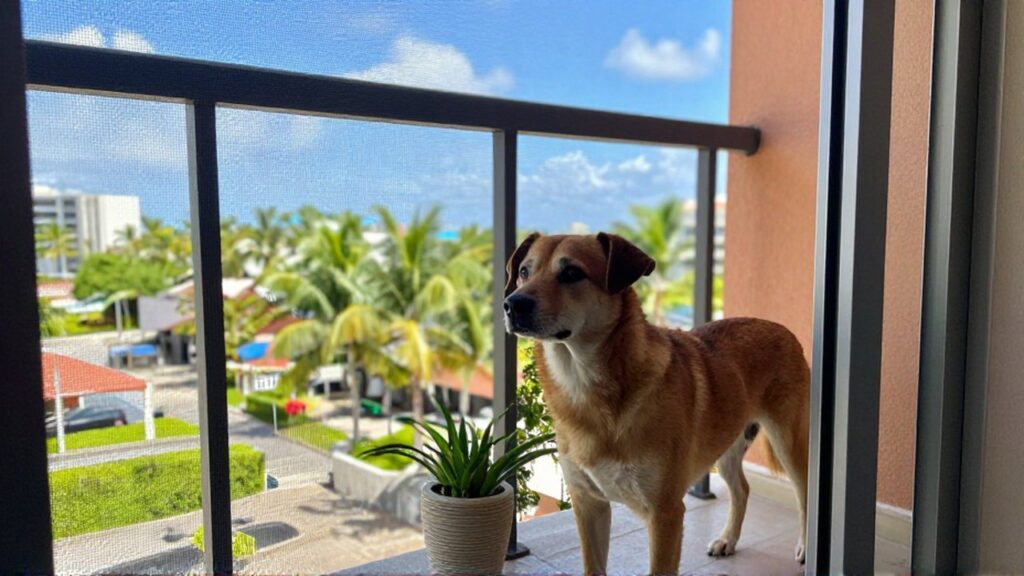
Balconies are perhaps the most significant risk factor in apartment pet ownership. While they offer much-needed outdoor access, they are essentially elevated platforms that can lead to serious accidents. The most effective way to secure a balcony is through the installation of specialized pet netting or high-quality mesh. This provides ventilation and views while creating a physical barrier that prevents pets from jumping over railings, and it is one of the most reliable pet containment solutions for high-rise living in the Caribbean.
When selecting materials, consider the durability required for the local climate. Look for UV-resistant pet netting that can withstand the intense Dominican sun without becoming brittle, since standard mesh degrades quickly under prolonged tropical exposure. If you prefer a more permanent solution, glass balustrades or reinforced metal railings can offer superior protection, though these may require coordination with your building administration. Always ensure that there is no furniture on the balcony, such as chairs or tables, that a pet could use as a "step" to reach the top of the railing.
Managing entryways and door safety

The moment a resident or delivery person enters the apartment is a high-risk period for escapes. In the Dominican Republic, where apartment buildings often have common hallways and frequent foot traffic, the "door dash" is a common way pets slip out. To mitigate this, consider installing a pet gate at the apartment entrance to create a secondary buffer zone, giving you time to secure the door before your pet can react to the opening.
For pets that are particularly fast or highly motivated by the outdoors, using a "double-door" system or an entryway vestibule is an ideal long-term strategy. Furthermore, always train your pets to "stay" or "wait" near the door. Positive reinforcement training can significantly reduce the impulse to bolt the moment a door swings open.
Preventing window escapes and ventilation risks
In an effort to keep apartments cool, many owners leave windows partially open. This is a dangerous practice if the windows are not equipped with proper limiters or screens. Standard insect screens are often too flimsy to withstand the weight or pressure of a climbing pet. Instead, invest in heavy-duty pet screens that are specifically designed to be claw-resistant and structurally sound, and pair them with window screens for cats that fit snugly into the frame to close off any remaining gaps.
If your apartment uses window-mounted AC units, ensure the surrounding gaps are completely sealed with foam or permanent weather stripping. It is also important to avoid placing anything near a window—such as a bed, a shelf, or a tall plant—that an animal could use to launch itself toward the opening.
Frequent pet escape prevention questions
Can I use standard insect screens to keep my cat safe on a balcony? Standard insect screens are designed only to keep bugs out and are generally too weak to hold the weight of a cat. It is highly recommended to use heavy-duty pet netting or reinforced mesh specifically rated for animal containment, and to verify that the netting is securely anchored at every corner before allowing your pet unsupervised access.
Is it safe to leave a pet alone on a balcony if the door is closed? Even with the door closed, a balcony can be a danger zone if the railings are not secured. A pet might try to climb the railing or find a gap. Always ensure the balcony itself is physically enclosed with pet-safe barriers before leaving an animal unattended.
How can I stop my dog from bolting when guests arrive? The most effective method is to use an indoor pet gate placed near the entrance to create a "safety zone." Combined with training your dog to remain calm during door transitions, this provides a reliable physical and behavioral barrier.
What should I do if I notice a gap in my window frame? You should immediately seal the gap using appropriate materials like weather stripping or expandable foam. If the gap is part of a structural issue or a faulty window frame, consider contacting a professional to ensure the window is both weather-tight and pet-secure.
Leave a Reply