
What to do if you find an injured sea turtle

Introduction
Finding an injured sea turtle on a beach or in shallow waters can be a distressing experience for any bystander. Sea turtles are vital components of marine ecosystems, playing crucial roles in maintaining the health of seagrass beds and coral reefs. Because they are protected species in many parts of the world, including the Dominican Republic, any encounter involving an injured animal requires a calm, methodical, and responsible approach to ensure both human safety and the turtle's chances of survival. Knowing the correct sea turtle stranding protocol before you act can make the difference between a successful rescue and a worsened outcome.
Knowing how to react in these critical moments is essential because improper handling can cause secondary injuries or increase the animal's stress levels, which can be fatal. This guide is designed to provide you with a clear protocol to follow, focusing on immediate safety, contact with professional authorities, and the do's and don'ts of marine wildlife assistance. By following these steps, you act as a vital link between the injured animal and the specialists capable of providing medical intervention, and you help ensure that every sea turtle rescue follows established first response guidelines rather than well-meaning improvisation.
Assess the situation and ensure safety
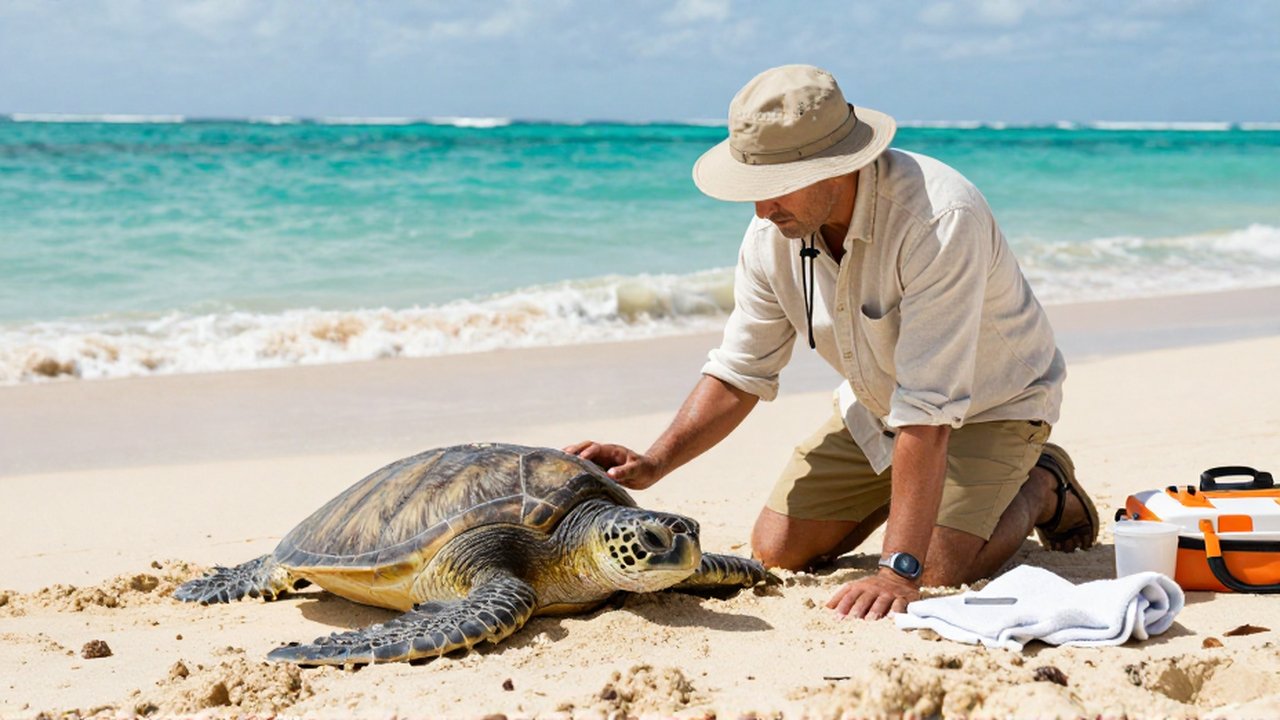
Before approaching the animal, you must evaluate the environment to ensure your own safety and that of others. Sea turtles are powerful creatures; even an injured one may attempt to bite or thrash its flippers, which can cause significant injury to a person. Furthermore, you must consider the tide and the surf. If the turtle is in an area where waves are crashing heavily, attempting to reach it might put you at risk of being swept out to sea. Treating this as an injured turtle safety measure is not optional: your own wellbeing comes first, because a rescuer who becomes a casualty cannot help the animal.
Observe the turtle from a distance first. Note its location, the approximate size of the animal, and the nature of its injuries. Are there visible wounds, entangled fishing lines, or signs of exhaustion? Is the turtle breathing heavily or struggling to move? Taking a mental note of these details—or documenting them with a photo from a safe distance—will be incredibly helpful when you contact rescue authorities. This careful injured sea turtle observation also lets you judge whether the animal is merely resting or genuinely stranded and in need of help.
Contact the appropriate authorities
The most important rule when encountering an injured sea turtle is that you are a witness, not a medical provider. You should never attempt to treat the animal yourself. Instead, your primary responsibility is to report the injured sea turtle to local environmental authorities, marine biologists, or specialized sea turtle rescue organizations, who are the only ones qualified to decide on medical intervention.
In coastal regions, there are typically specific government agencies or non-governmental organizations (NGOs) dedicated to marine life protection. In the Dominican Republic, the Ministry of Environment and Natural Resources and its regional offices handle wildlife emergencies, and local marine conservation groups can also coordinate a response. When you call, provide the following information:
- Exact location: Use landmarks, GPS coordinates from a smartphone, or specific beach names.
- Condition of the turtle: Describe visible injuries or behaviors.
- Species identification: If you know the species, mention it; if not, describe the shell shape and color.
- Environmental factors: Mention if the turtle is stuck in debris, on a high tide line, or in deep water.
Proper handling and immediate care steps

If authorities instruct you to stay with the turtle or move it to a safer position, follow their directions strictly. If you must move a turtle that is stranded on dry sand and at risk of being washed away by a coming tide, do so with extreme caution. Always keep the turtle's head out of the sand to ensure it can breathe freely. This is the core of sea turtle first response: stabilize the animal without adding stress, and never attempt to drag it by the shell or limbs.
If the turtle is entangled in plastic or fishing gear, do not attempt to cut the lines unless specifically instructed by an expert. Cutting the wrong part of the entanglement can cause the injury to tighten or cause the animal to panic. If the animal is resting in a calm area away from immediate danger, the best course of action is often to simply monitor it from a distance until professional help arrives. In many cases, the most valuable injured turtle beach assistance you can provide is patience and a clear line of communication with the authorities.
| Action | Recommended | Avoid |
|---|---|---|
| Movement | Only if directed by experts | Moving the turtle without guidance |
| Interaction | Stay calm and quiet nearby | Touching, feeding, or poking the turtle |
| Documentation | Taking photos from a distance | Approaching too closely |
| Safety | Watching the tide and waves | Entering deep or rough water |
Common mistakes to avoid
One of the most frequent mistakes people make is attempting to "help" by providing food or water. Sea turtles have highly specialized diets and digestive systems; giving them human food or even inappropriate marine food can cause internal damage or death. Additionally, do not attempt to lift a turtle by its flippers, as this can dislocate limbs or damage their internal organs. Remember that touching a sea turtle without authorization can carry legal consequences under Dominican wildlife protection laws, so restraint is both safer for the animal and safer for you.
Another significant error is overcrowding the area. A crowd of onlookers can cause extreme stress to an injured turtle, potentially leading to shock. Once you have called the authorities, keep other bystanders at a respectful distance to create a quiet environment for the animal and to allow rescuers easy access to the site.
Frequently asked questions
Can I give the turtle water to drink? No. Sea turtles get their hydration from their diet and the seawater they process. Providing fresh water can disrupt their internal salt balance and cause serious health issues. If you are unsure how to help an injured sea turtle, the safest answer is always to contact the authorities and wait for their guidance.
Should I try to pull the turtle back into the ocean? Only if the turtle is healthy and appearing to move toward the water on its own. If the turtle is clearly injured, exhausted, or trapped, forcing it into the water could lead to drowning if it cannot swim properly.
Is it illegal to touch a sea turtle? In many jurisdictions, including the Dominican Republic, sea turtles are strictly protected under national wildlife legislation. Touching or handling them without professional authorization can lead to legal consequences, so the safest course is to report the injured sea turtle to the proper authorities and let trained responders handle the animal.
What if I cannot reach anyone by phone? If immediate professional help is unavailable, keep a close eye on the turtle from a distance to ensure it is not being attacked by predators or buried by shifting sand, and wait for the next available window to contact authorities.
Leave a Reply